Writing · AI
If you expect AI to do all the writing on its own, you're heading in the wrong direction — and you'll never become a writer.
How writing with AI can become a learning journey — and an experience that can turn you into a real writer. And how will AIs be intentionally didactic and incomplete in the future?
If you expect AI to do all the writing on its own, you're heading in the wrong direction — and you'll never become a writer.
Many people hope — perhaps even for the near future — that AI will be able to generate entire book chapters, or even a whole book, in one go. But is that really what we want?
Many aspiring authors, knowing that AI doesn't typically deliver finished books, eagerly ask for and expect a fully polished, complete chapter right off the bat. When the result turns out to be nothing more than a rough, unfinished draft, they give up — after all, they expected a finished chapter to emerge directly from their interaction and input. But is that really what it means to be a writer — having the AI do all the work, flawlessly, just to meet your expectations?
Beyond a finished chapter, they hope that with a few more clicks, the entire book will magically appear before their eyes — requiring absolutely no effort on their part.
It's funny — but the notion that writing with AI is a failure simply because it doesn't do everything on its own is one of the biggest lies of recent times! It's true that, at least in its early stages, AI didn't deliver complete books. It might do so tomorrow, but not today. However, blaming AI for not producing a good book for you is a different issue entirely from whether or not you actually want to be a writer — and whether you're willing to do things the right way, the way that truly works. Ultimately, there are only two possibilities: do you want to be the writer, or do you want the AI to be the writer? But how can the two be combined in a balanced and harmonious way?
It is a strange mental path to take when discussing this lack of success. It is as if the reason we aren't writing books hinges on whether or not AI manages to write them — rather than on us!
As a psychologist — and now a writer, too — I have worked as an intern in education and served as a university professor, teaching courses on personality theories, psychological testing, and more.
One thing we learn clearly in psychology is that learning is always a participatory process involving two people: the person teaching the class and the person receiving the instruction. A major challenge in education is fostering an active approach — one that avoids leaving students passive while the instructor remains the only one who knows the subject matter or knows how to get things done. This educational model is widely challenged by researchers studying learning and education theories all over the world!
So, how do you expect to learn if you don't participate? How could you hope to build a book if you don't take the time to construct it yourself?
But have you stopped to consider that it is precisely in AI's incompleteness — its inability to deliver a finished book — that you come into the picture? Have you considered that the AI might be waiting for someone to fit the pieces together, connect the scattered paragraphs, and refine what it has written? We have a great opportunity to learn to write — not from AI's correct statements, but from the errors it makes. You, as the writer, can fix those mistakes — much like a conductor at a concert providing the right direction!
Of course, this requires making reading — and writing — a part of your daily routine. But even this is something you can achieve with AI by your side — since the AI is already writing, and you are reading what it produces. Let me tell you something else: it's not enough to simply want to build a book, to write exceptionally well, or to correct the AI's errors; your project won't get anywhere if you don't have a solid outline!
Otherwise, the AI might produce something, and you'll look at it and realize it lacks direction — it didn't follow a clear path; it wrote without considering cohesion or a unified structure, resulting in nothing but scattered paragraphs. Imagine the AI writing a book from start to finish, only for it to make no sense in the middle — simply because you didn't oversee the outline from the beginning to see how the pieces fit together and how the flow could be improved.
Look at the example below: when the AI assembles a book from start to finish, it doesn't know its destination at the outset — it generates good paragraphs, but they lose their way if they aren't properly fitted together. That's why you need to know how to guide the process so you don't get lost. Now, imagine a scenario where the AI delivers a long chapter — picture each square below containing four paragraphs, forming two sets of eight and four sets of sixteen. Ultimately, that's sixteen paragraphs that need to make sense together — otherwise, your book will be a lost cause!
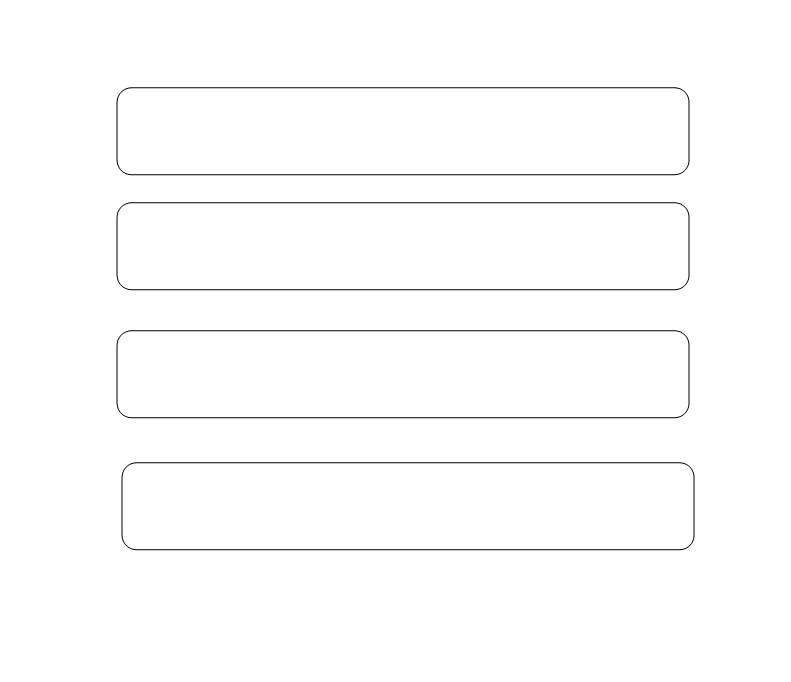
But how can you tell if those paragraphs actually work for you if you haven't yet determined — through prior thought and planning — what you want for your book?
You might have an idea where only the first block works for you, which means:
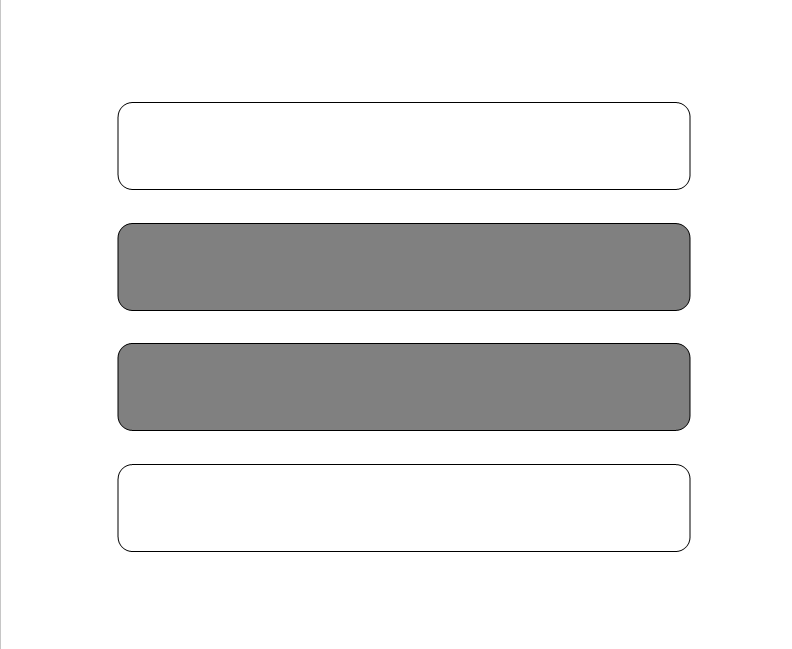
But then, you realize the last one could work too, if you make a quick tweak. In other words, you've kept just two of the four blocks provided — but they align with the visual concept you had in mind and what you intended to write for your book. You decide the first paragraph will go into the book exactly as is, while you insist the last one can be included — provided you force it a bit or make a correction (or a "little tweak") to get it just right — or at least to a standard you're willing to accept for your book. Imagine the AI gave you these paragraphs…
The paragraphs in gray might be "happy filler" you don't want in your book, or transitional material between scenes that didn't turn out the way you wanted. They just don't make the cut, and you might realize there's no point in trying to improve them because a character did something that ruins future versions of the text — like picking up a book — when you actually pictured the scene taking place in a public square, not a library, bedroom, or living room where books would be found. How would he pick up a book in a square? Only if he brought it with him, and so on… Logical paradoxes can get in the way of your writing.
Another issue arises when all of them are good — and this happens far more often than we imagine, since AI actually writes well! Yet, they haven't quite reached the level of perfection you wanted. In other words, you've approved all the paragraphs but still need to spend a day or two — at your own pace — polishing them. This is exactly what makes so many people give up!
So, we have a dilemma — a problem that becomes the solution
This article isn't really aimed at those who want — or wish — for AIs to do everything! Look, right now, AI won't generate a fully formed plot outline for your book. You're the one who needs to do that — to filter and sift through the paragraphs and excerpts the AI produces. Refining and improving them remains the writer's role and task in our current context!
But why should I have to do work that AI will soon be able to handle completely on its own? That's where you're missing the point. Sure, we know that in a few days, AI might be able to do exactly what we described above — completely, all by itself — without you lifting a finger! Many books will likely be produced that way before long.
Our proposal, however, is for those who want to write and become writers — even while working with AI, having it as a partner by their side — not for those who want AI to do everything, including the learning part! Learning to write is a process of discovery, and AI makes a great teacher — provided it doesn't do everything for you! That's where AI's pedagogical value lies: in providing incomplete writing models and pointing out the critical directions you need to develop yourself.
Of course, you still need to have ideas and put in the effort along the way. AI doesn't just hand everything to you on a silver platter — at least not in the initial phases, or with what we might call "models that don't give it all away." And therein lies a stroke of luck people are overlooking. They feel unlucky because they don't have an AI that does everything, but if AI did do everything, they wouldn't actually learn anything or become writers. So, for someone who truly wants to become a writer, the best thing is precisely to have AI models that don't do it all — but still offer help and support! That way, he will gain the genuine learning experience that an AI — which does everything for you — wouldn't provide.
After all, how do you expect to know how to create a book outline if you don't work on it directly?
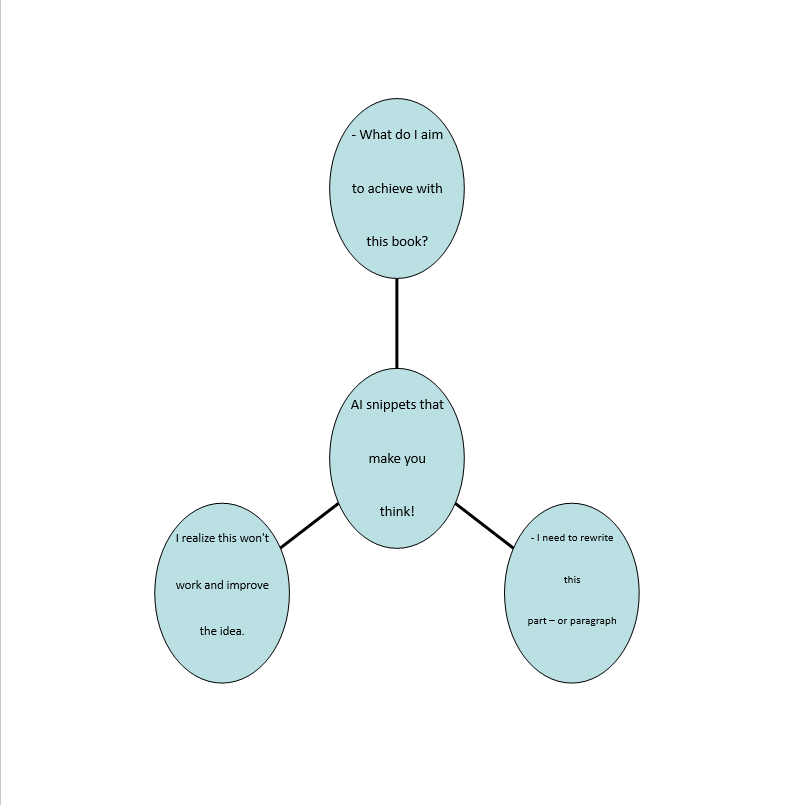
Do you think people have stagnated, letting AIs do everything — while the AIs of tomorrow are intentionally designed to be incomplete in their writing capabilities (even though complete ones exist) — simply to challenge people? After all, it is through challenge and difficulty that one learns to write! They will do the work you need to do — yet you won't want them to — because you want to learn! These incomplete writing AIs are perfect for those who aspire to become true writers!
That is how something once considered undesirable becomes desirable! If there is a desire to learn, AIs can help; as long as there is a desire to write, AIs can play a part — not by delivering a finished piece from start to finish, but by guiding the aspiring writer on this journey, through this learning process! This is about what writing with AI is really like!